We call it Craig’s List on steroids. My wife, a prolific user of Le Bon Coin, had saved a search for “wood” with the hope of finding stock for my nascent woodturning studio. It had not been too long running when she asked if I’d be interested in some buis — someone was selling boxwood.
Generally growing to a modest size and trimmed regularly to fixed shapes, boxwood can grow up to 8 meters tall when left to grow. With a circumference rarely allowing anything but a modestly sized bowl, it is sought after for turning and carving smaller pieces. What small pieces might come from this newfound stash I do not yet know, although I do dream of turning a chess set some day.
When we went to review and eventually purchase the boxwood trunks, the family cleaning their property asked if I was also interested in a some wood of another species. The diameter was decent and the red-brown heartwood looked interesting. We took those as well and then left for the summer.
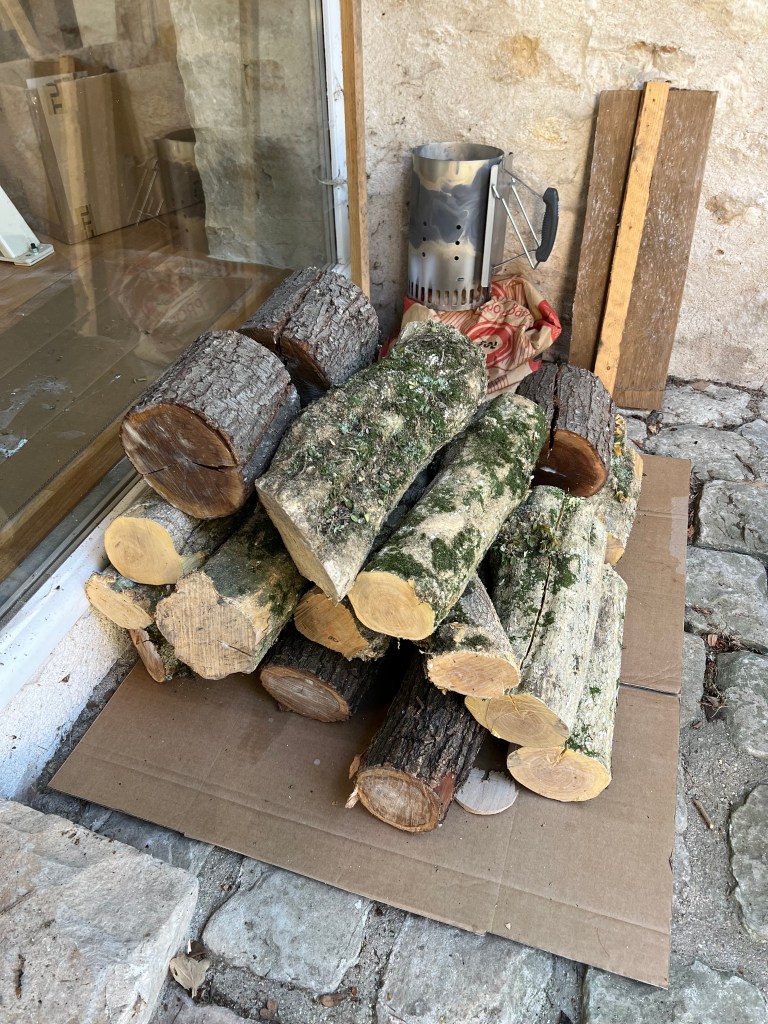
Returning in the fall, I took to cutting the logs to workable lengths and sealing their ends. Of course we had forgotten the species of the other tree! While the boxwood remained remarkably stable over the summer, the other was checking with extraordinary gusto, as seen in the image below. I sealed the newly exposed ends anyway, hoping that future drying would put most of its effort into the major splits appearing in the middle of each length.
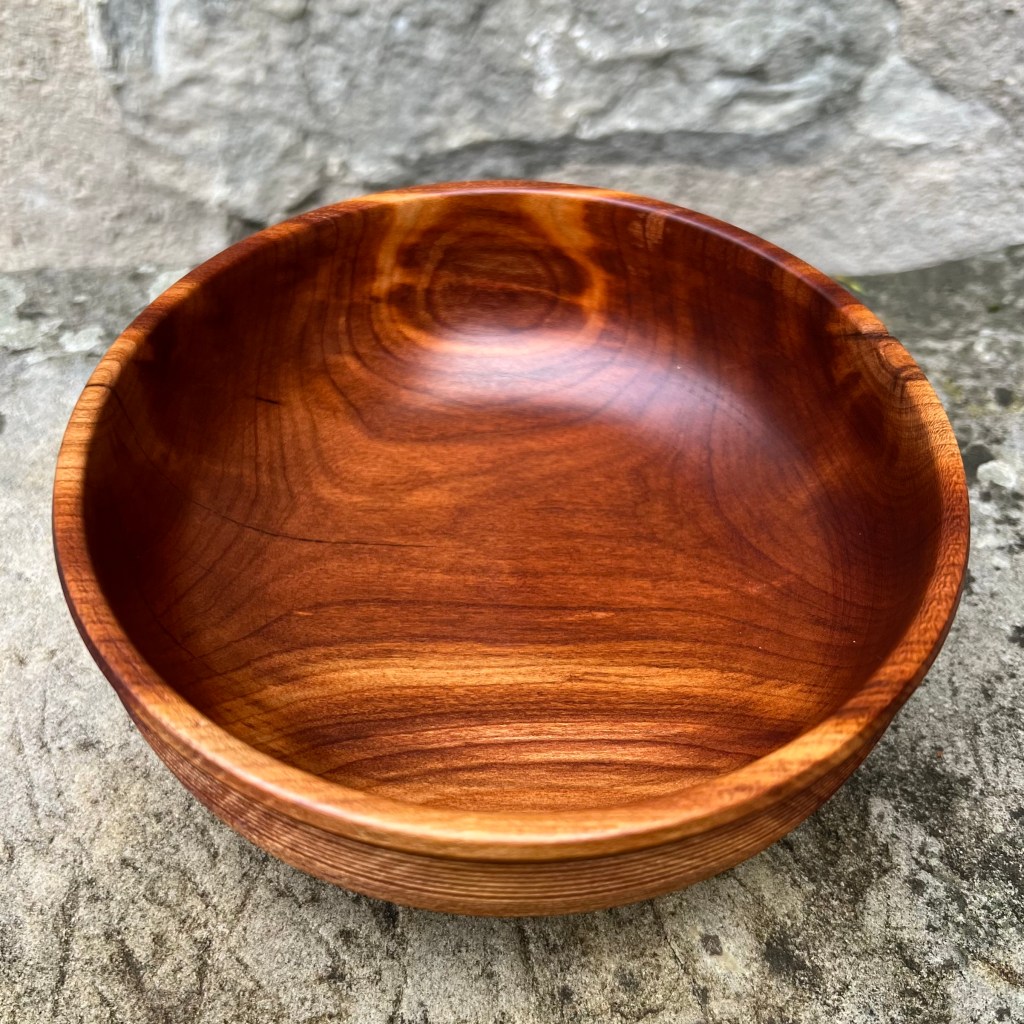
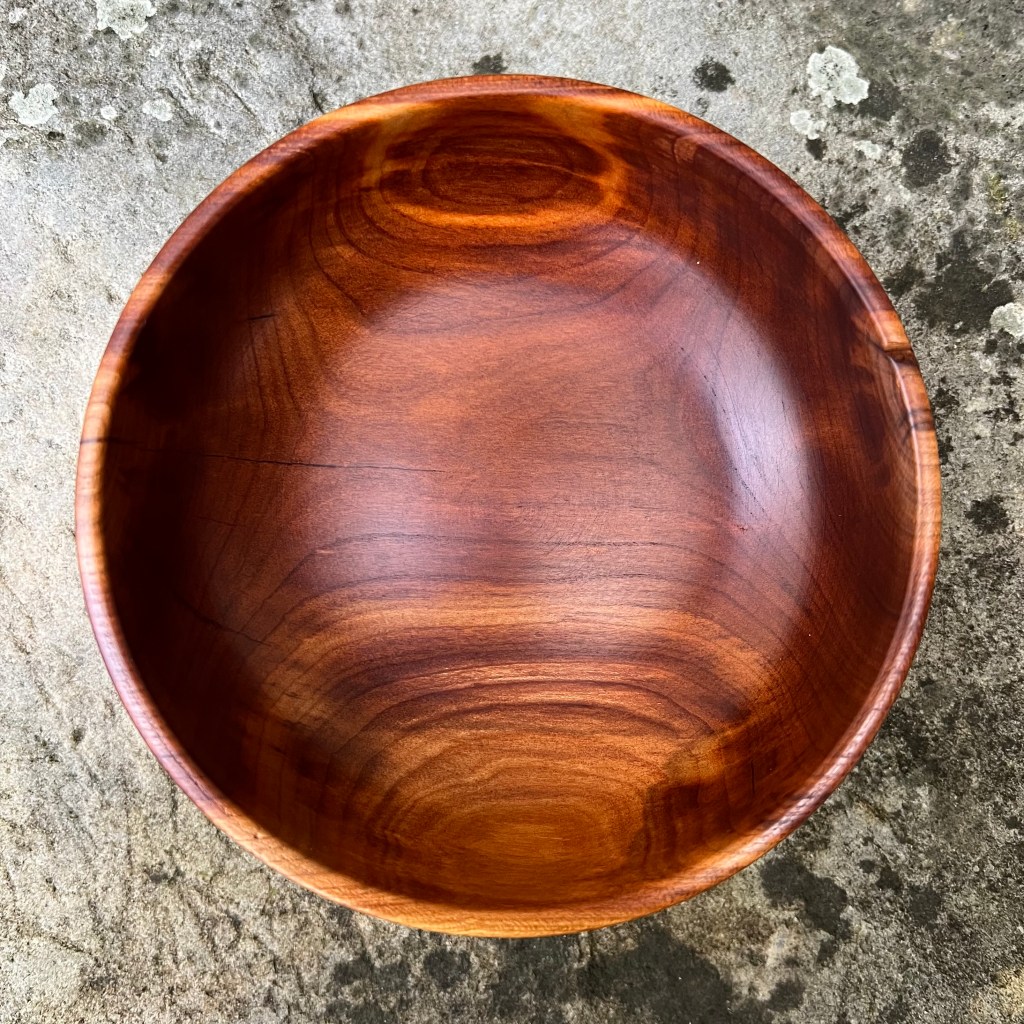
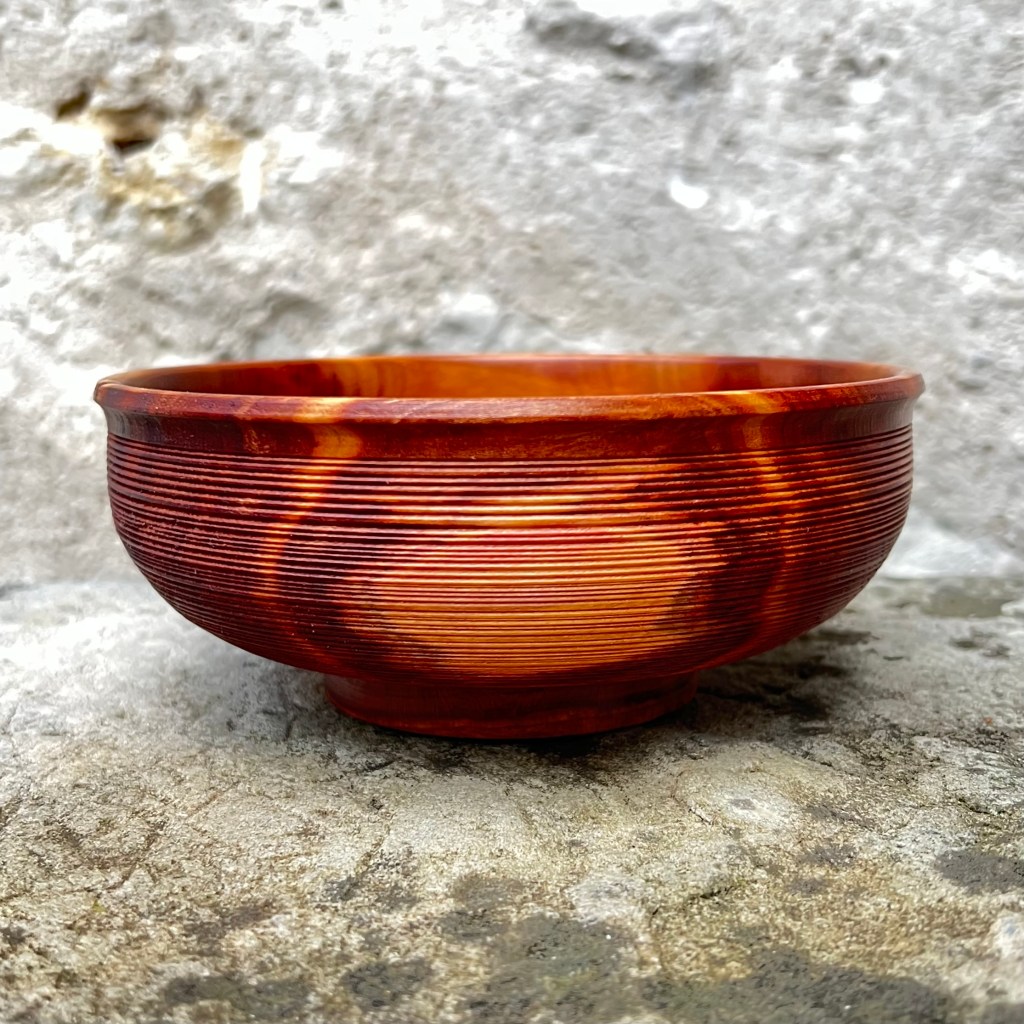
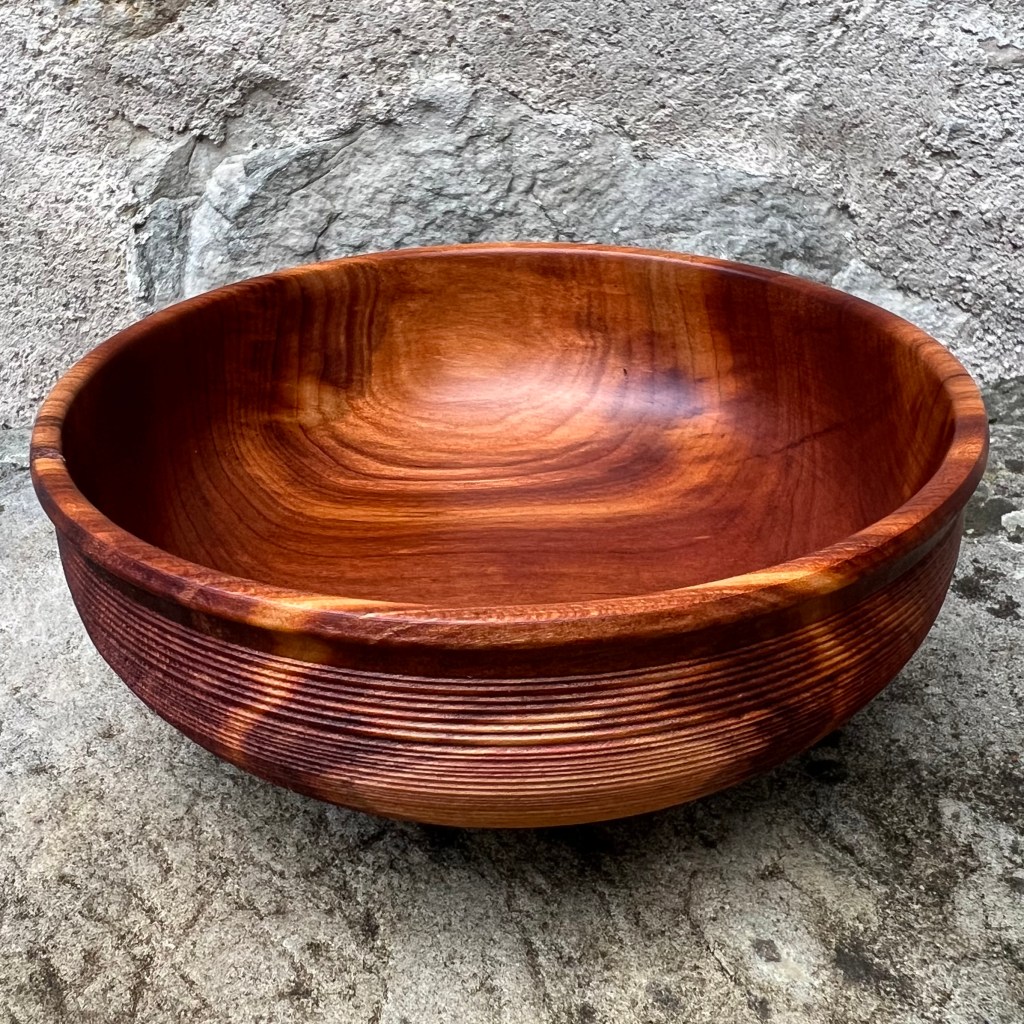
Fast forward to November, I split and turned a half of that darker wood. The bowl pictured below is the result. My best guess for the species is European plum, prunus domestica. This could be from a tree known in Britain as a greengage — Reine-Claude in France. It is common to the area where the wood was collected and my turning studio is found.
 thecaveforwood.work