Bowl — wood species unknown?

We call it Craig’s List on steroids. My wife, a prolific user of Le Bon Coin, had saved a search for “wood” with the hope of finding stock for my nascent woodturning studio. It had not been too long running when she asked if I’d be interested in some buis — someone was selling boxwood.

Generally growing to a modest size and trimmed regularly to fixed shapes, boxwood can grow up to 8 meters tall when left to grow. With a circumference rarely allowing anything but a modestly sized bowl, it is sought after for turning and carving smaller pieces. What small pieces might come from this newfound stash I do not yet know, although I do dream of turning a chess set some day.

When we went to review and eventually purchase the boxwood trunks, the family cleaning their property asked if I was also interested in a some wood of another species. The diameter was decent and the red-brown heartwood looked interesting. We took those as well and then left for the summer.

Returning in the fall, I took to cutting the logs to workable lengths and sealing their ends. Of course we had forgotten the species of the other tree! While the boxwood remained remarkably stable over the summer, the other was checking with extraordinary gusto, as seen in the image below. I sealed the newly exposed ends anyway, hoping that future drying would put most of its effort into the major splits appearing in the middle of each length.
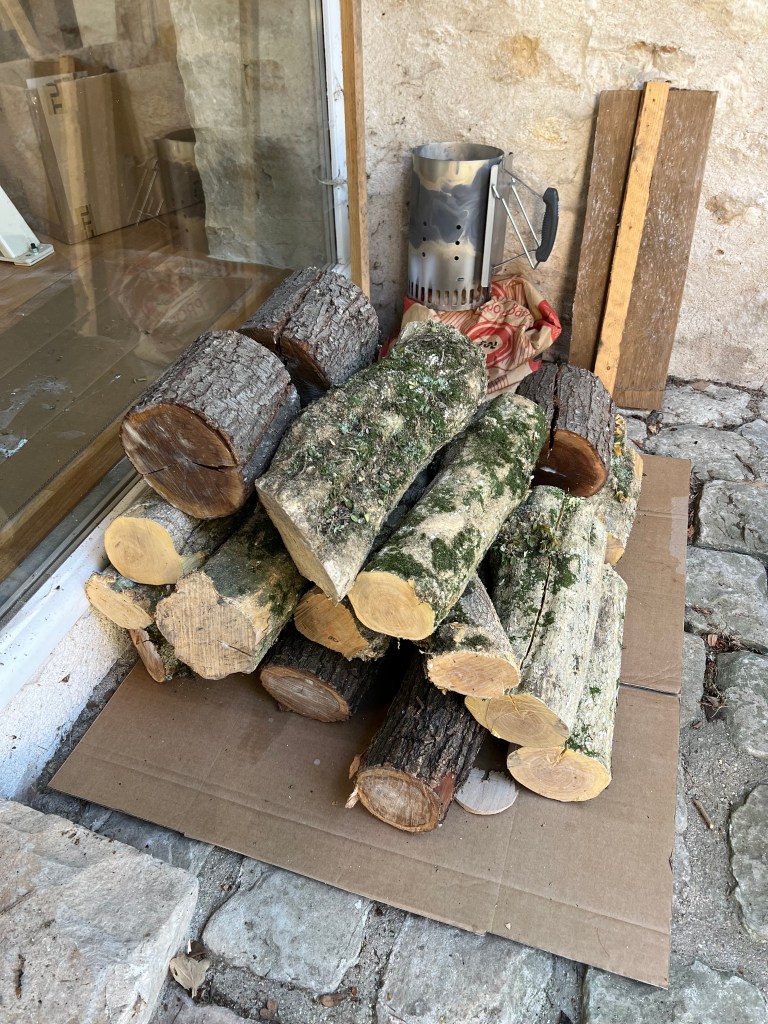
Boxwood logs, yellow and mossy, sit with a darker wood of a species unknown. The traces of white on the ends is a coating of wax which clears as it dries.

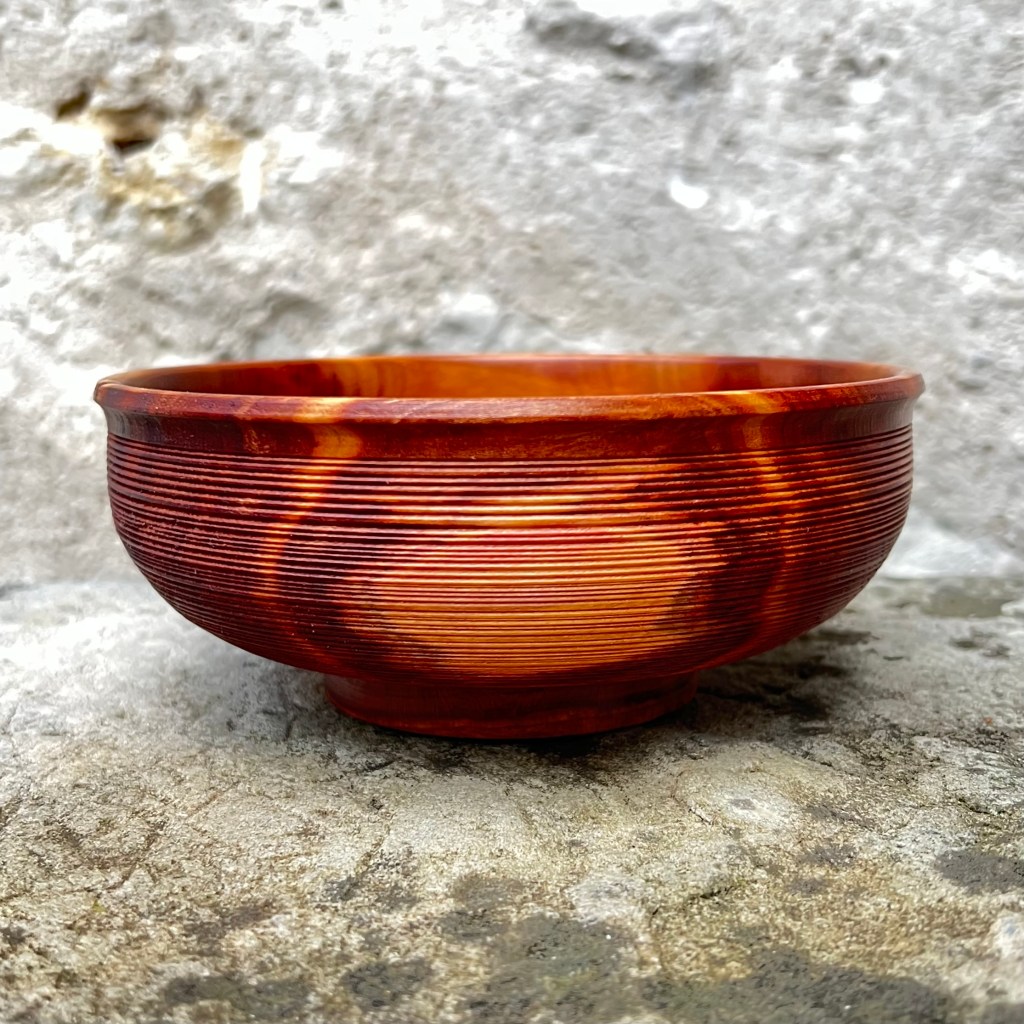
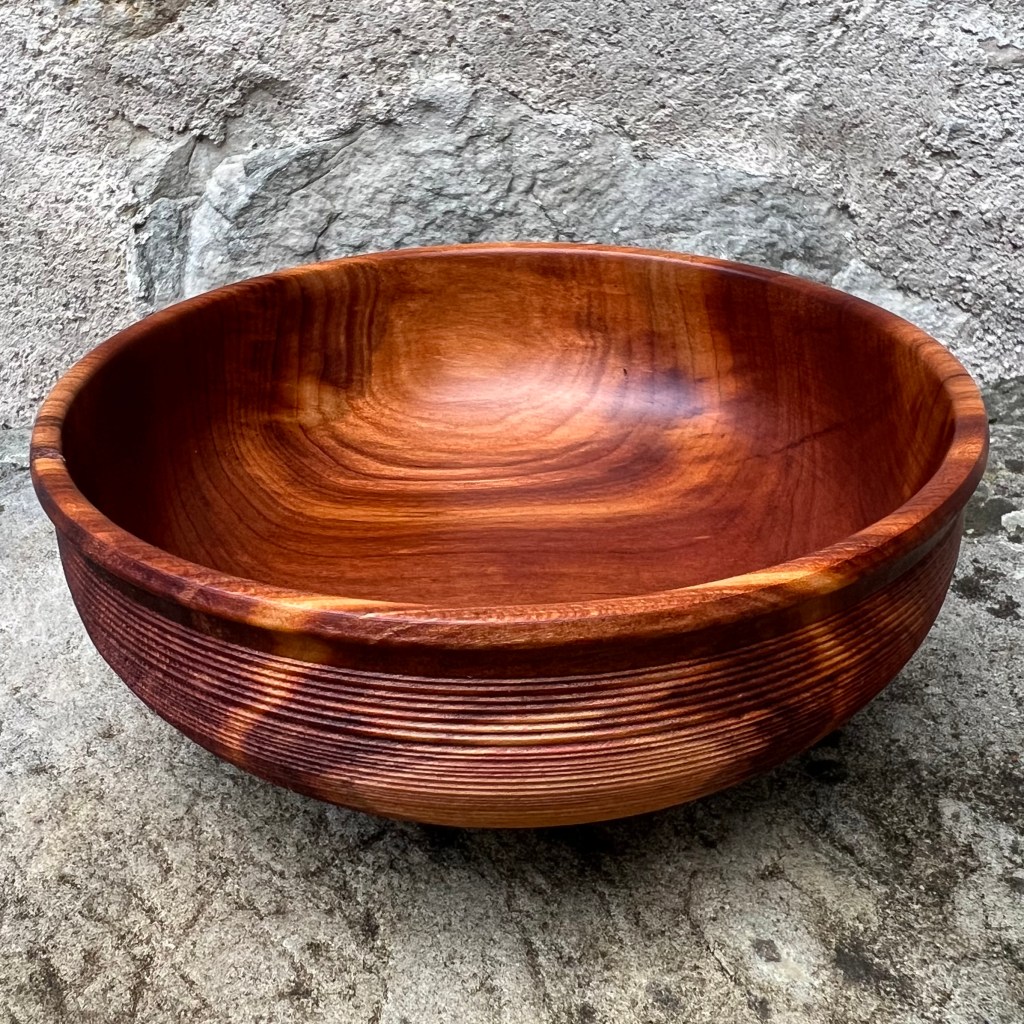
Fast forward to November, I split and turned a half of that darker wood. The bowl pictured below is the result. My best guess for the species is European plum, prunus domestica. This could be from a tree known in Britain as a greengage — Reine-Claude in France. It is common to the area where the wood was collected and my turning studio is found.
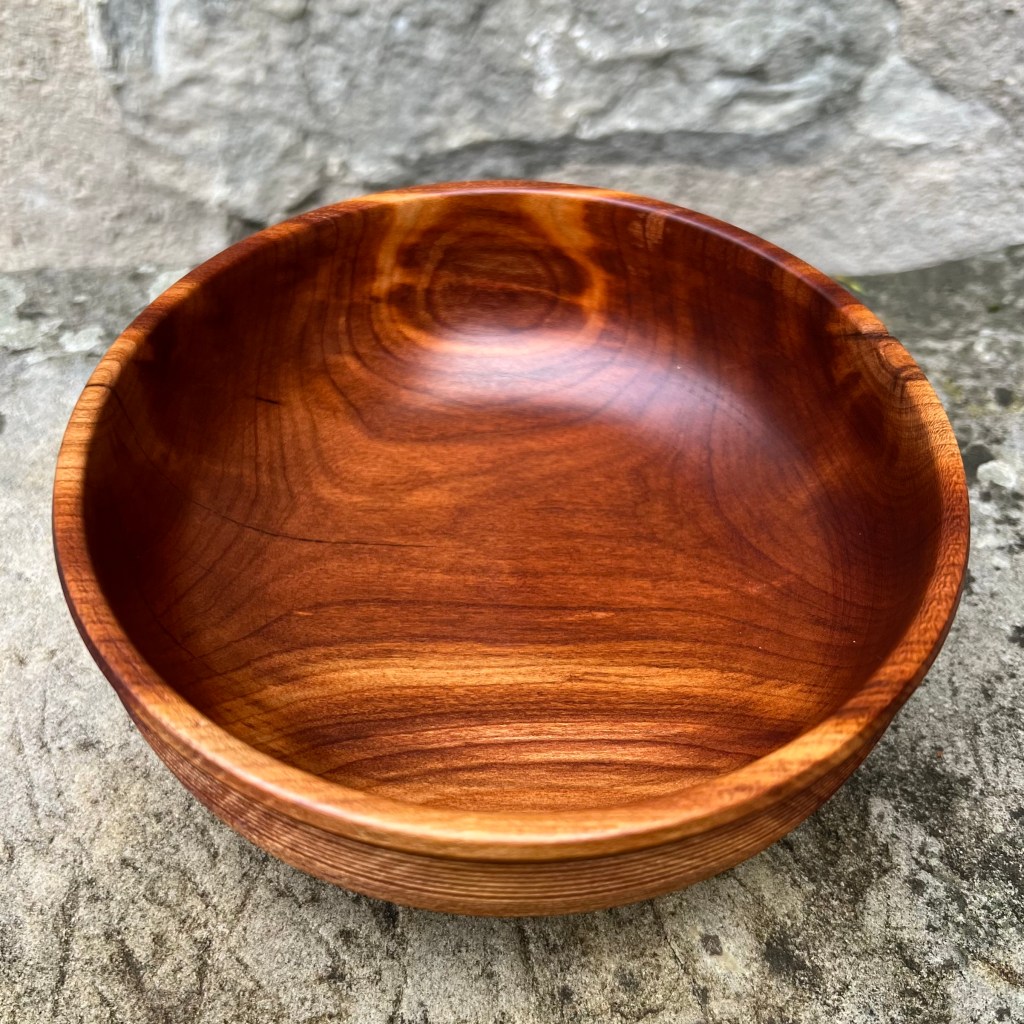
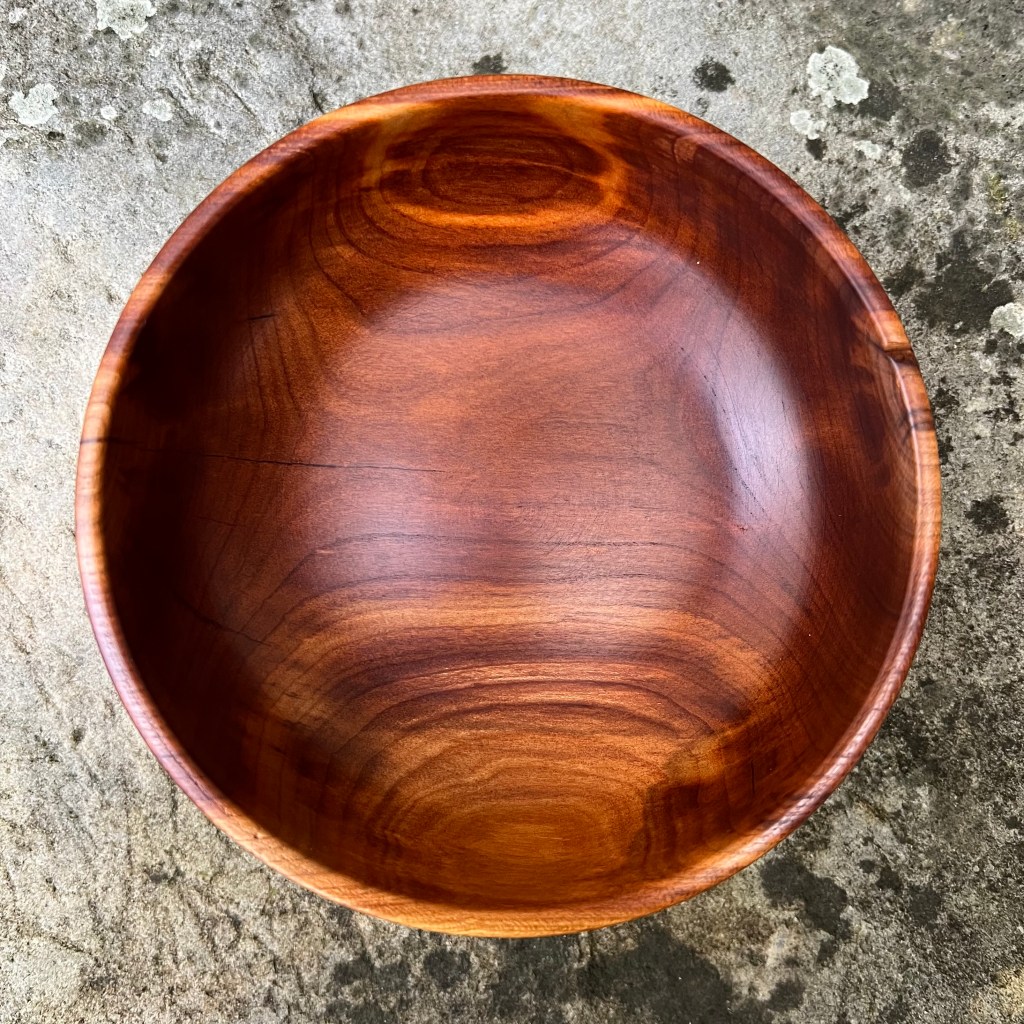
Bowl — wood species unknown?

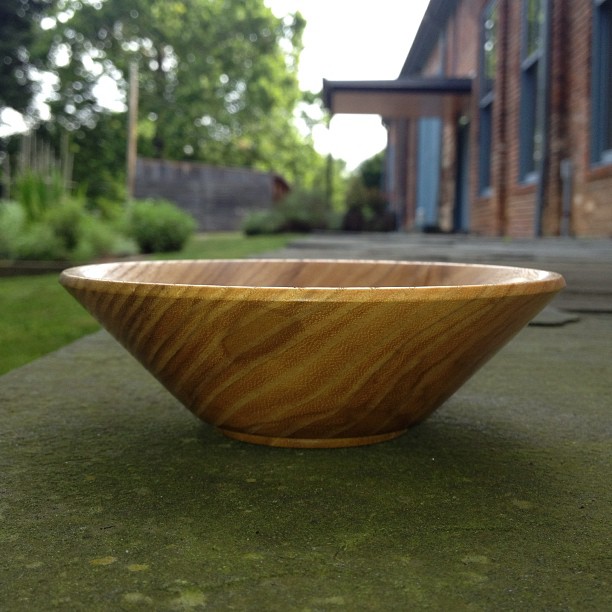
Sassafras bowl

It’s the leaves and bark of the sassafras which are aromatic — once the bark is off the log,  the aroma is lost. The wood remains handsome though, its dark end grain giving way to a pale yellow along the grain.

The bowl is about 4 ½” in diameter and 2″ tall. Turned from a wet blank already showing some splits, it remained relatively stable during its time on the lathe. The exterior was charred with a propane torch before an oil and wax finish was applied.

Sassafras is brittle and, as I pushed the limits on how thin a bowl I could achieve (3/32″ at the sides and bottom), the rim did break in places.

It’s a pleasure to use this bowl which might explain why I did not give it away. It’s quite light, mimicking the delicate potato chips which sometimes fill it.

Thanks go to my sister Kay and her husband Greg for providing the blank.

Sassafras bowl

Pear wood bowl

Turned over the course of a few days…getting my seasonal feet wet on the lathe with something bigger than usual.

This bowl came from a half-log section given to me by our arborist some years ago. The wood is undoubtedly still wet although it feels and behaves as if dry — for the moment. Two hairline cracks appeared while turning. Sanding and finishing bowls remains a struggle for me — I spent some time trying to eliminate the flats in the interior curve with moderate success. Sanding marks remain. Sometimes it’s necessary to move on to the next thing.

I gave this bowl to a visitor from Connecticut. She’s a childhood friend of my sister who also appreciates the view and the food here.

Pear wood bowl

Three bowls

23475468460_246de24dfe_k
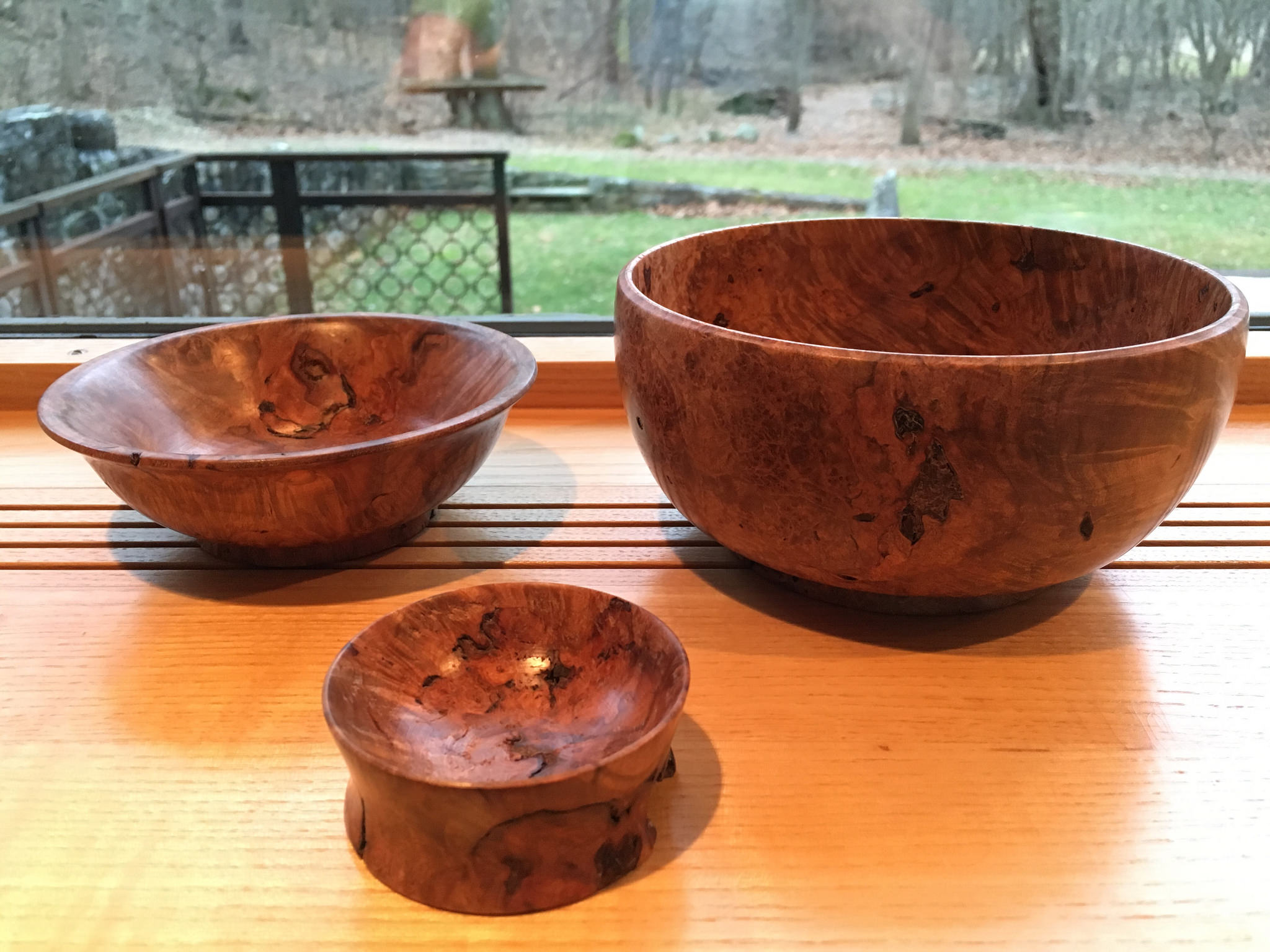
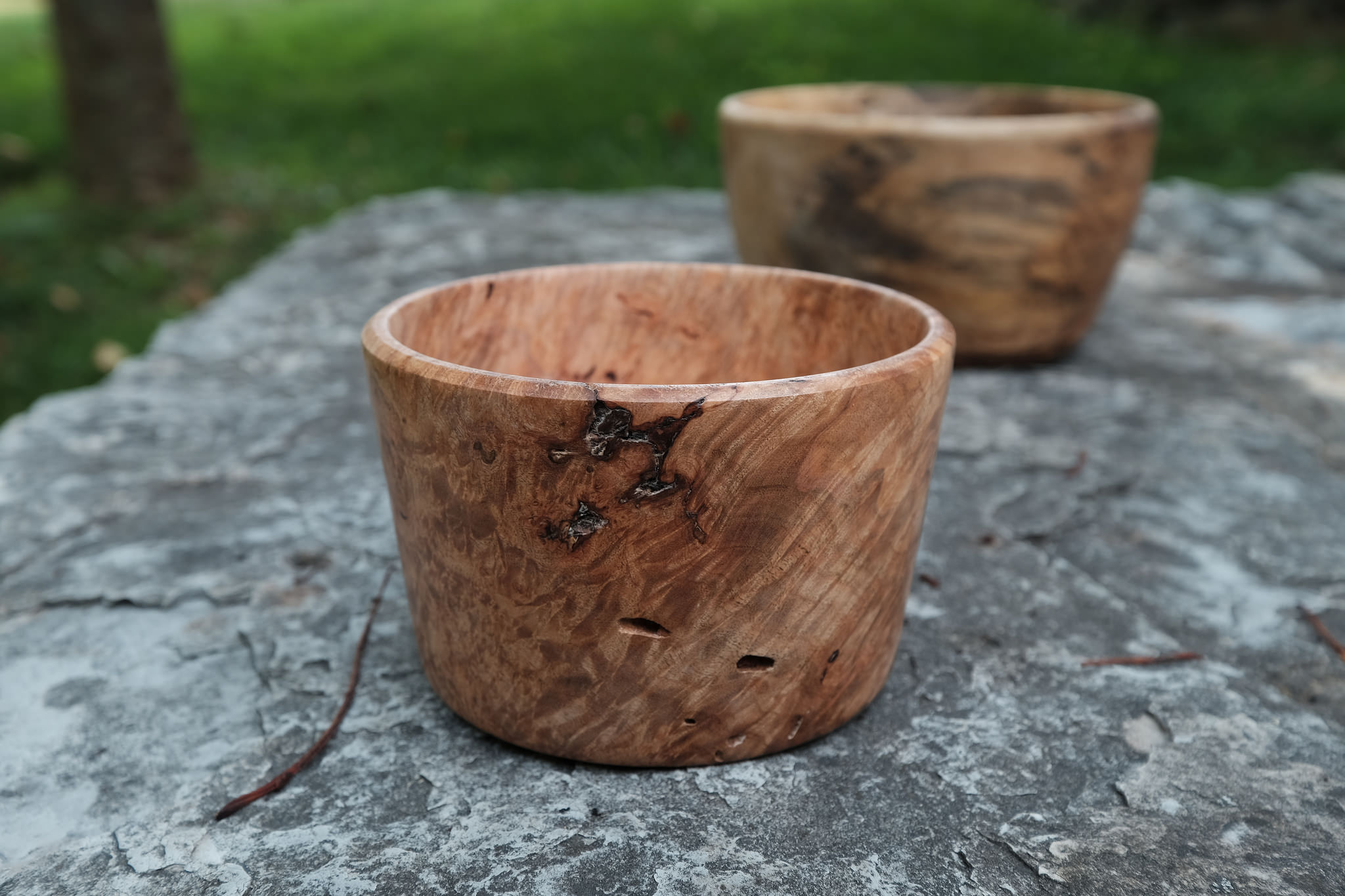
Bowls: 2016; Maple burl; sizes unrecorded.

The large bowl on the right was turned as a wedding gift for my niece. The small one in the foreground was turned quickly as an experiment in form. The small bowl on the left also represents a departure in my typical form-making. It is my first bowl which takes on a more “classical” shape, with its flared rim. All have a oil and wax finish.

Three bowls

Cedar bowl

17567594586_9003b93220_k

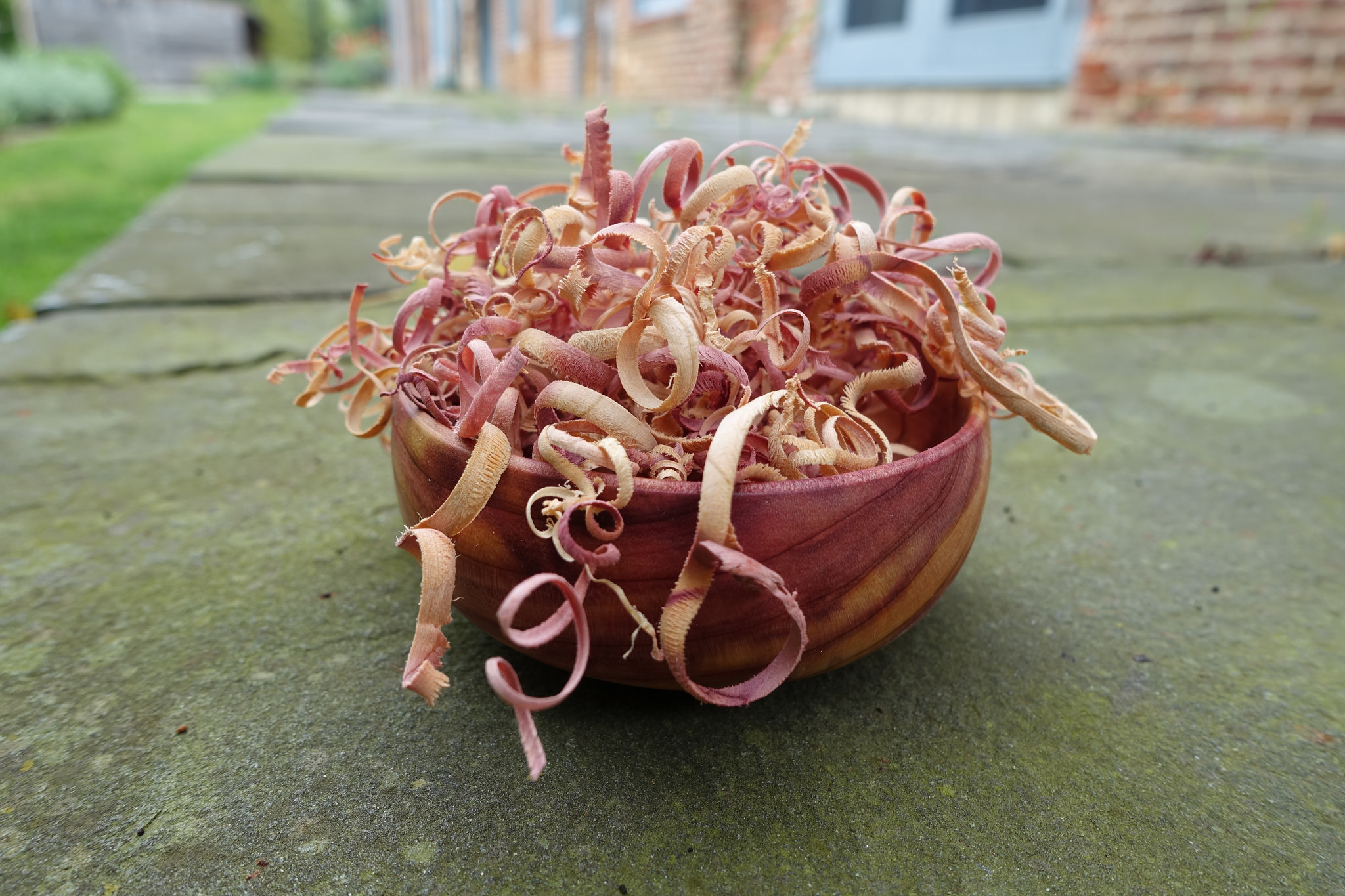
A very quick turning…more an investigation and exercise than an intent to end with a useful bowl. I am not certain what use a bowl turned of cedar might be as, because of it’s strong odor, it is certainly is not appropriate for food. Left unfinished, it may some day find a place where its natural role as an insect repellant will be useful.

Cedar bowl

Maple burl bowl

20826783872_3d73153c8a_k
Bowl: 2015; Maple burl; size unrecorded.

This bowl was turned as a gift for the vacation house of family friends. It is one of the larger bowls I turned from a large slab of maple burl I received from a carpenter who turned bowls once a week.  I did nothing to fill or glue the holes in the bowl; as a bread bowl or other dry goods, these defects will be of little consequence. The bowl is now in the Green Mountain State: Vermont.

Maple burl bowl