Three bowls

23475468460_246de24dfe_k
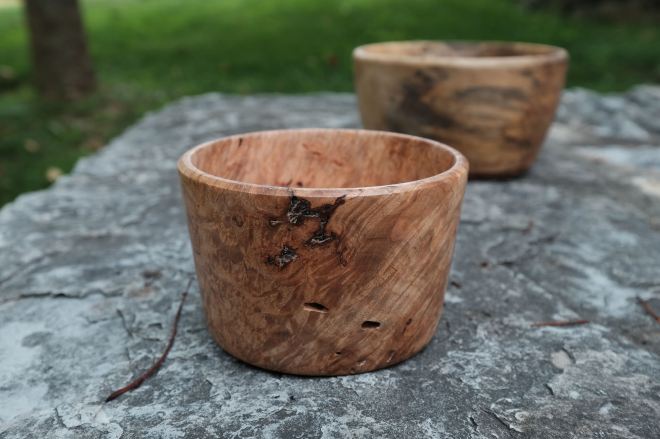
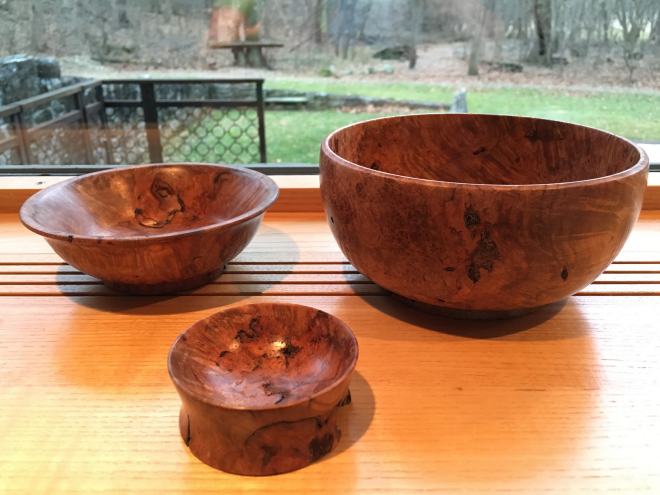
Bowls: 2016; Maple burl; sizes unrecorded.

The large bowl on the right was turned as a wedding gift for my niece. The small one in the foreground was turned quickly as an experiment in form. The small bowl on the left also represents a departure in my typical form-making. It is my first bowl which takes on a more “classical” shape, with its flared rim. All have a oil and wax finish.

Three bowls

Cedar bowl

17567594586_9003b93220_k

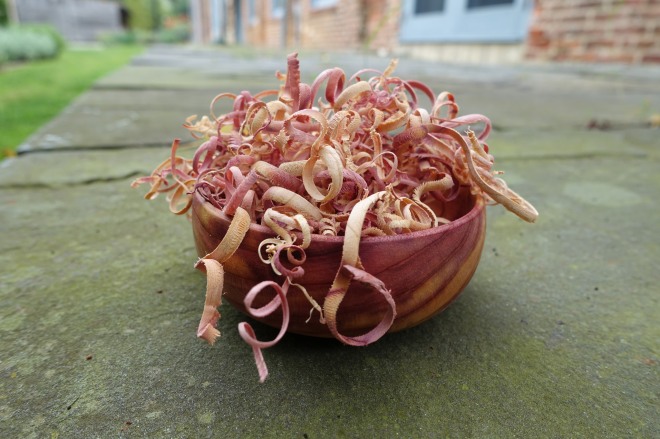
A very quick turning…more an investigation and exercise than an intent to end with a useful bowl. I am not certain what use a bowl turned of cedar might be as, because of it’s strong odor, it is certainly is not appropriate for food. Left unfinished, it may some day find a place where its natural role as an insect repellant will be useful.

Cedar bowl

Maple burl bowl

20826783872_3d73153c8a_k
Bowl: 2015; Maple burl; size unrecorded.

This bowl was turned as a gift for the vacation house of family friends. It is one of the larger bowls I turned from a large slab of maple burl I received from a carpenter who turned bowls once a week.  I did nothing to fill or glue the holes in the bowl; as a bread bowl or other dry goods, these defects will be of little consequence. The bowl is now in the Green Mountain State: Vermont.

Maple burl bowl

Bedroom closets

Five doors conceal three closets, the group of which also functions as the fourth wall to a bedroom. This wall includes the frame of the door to the room.

The closet doors are water resistant* medium density fiber board (MDF — médium en français) painted white to match the walls of the room. Water resistant MDF is heavier than the standard. It cuts more cleanly and takes finishes better. The knobs are brass.

All cabinet boxes, custom-sized to maximize the use of space, are built using oak veneer plywood, finished in a water-based polyurethane. The cabinet boxes are edged with 10mm of solid oak. The end closet on the right includes five drawers of baltic birch plywood with full extension glides.
Bedroom closets

Cabinet fronts

DSCF6147
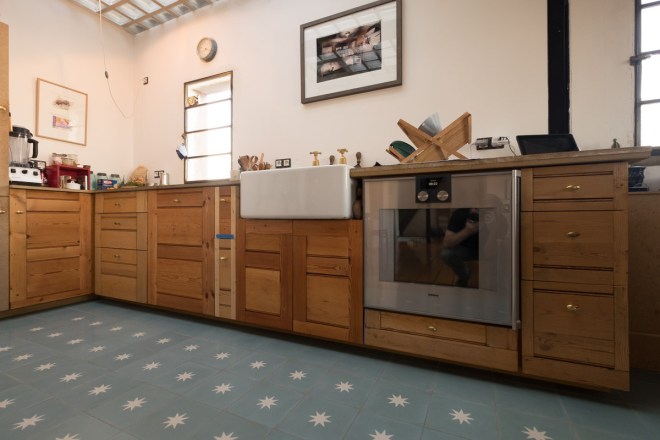
Kitchen cabinet fronts: 2015; reclaimed cabinet fronts; unfinished. Carcasses by other.

Still a work in progress, the wood for these cabinet fronts are on their fourth life. (Fifth if you count the tree.) Purportedly once installed as paneling in a church, the materials were first reused as cabinet fronts in this very kitchen. Some years after that first application, the cabinets were changed and the fronts changed with them, being cut and reshaped as needed.

Then it was my turn. With a need to be even more daring, some new pieces were milled (savaged from an existing wood floor which itself was once reclaimed from the floors of box cars) to stretch the widths of some of the panels and build new shapes in their entirety (e.g. the drawer fronts under and to the left of the sink).

Cabinet fronts

Osage orange bowl no. 2

IMG_0620
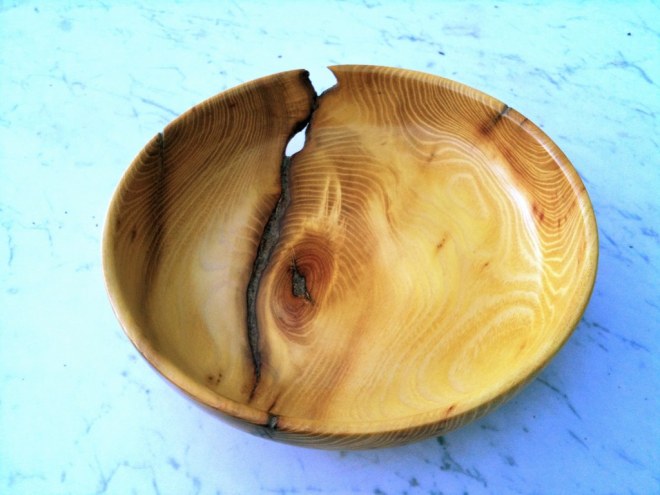
Bowl: 2010; Maular pomifera; approx. 9″ dia. by 4″ high.


A shallow bowl turned from a log of Osage orange, where the cracks won. Note the skips in the turning visible just to the left of the large crack at the rear.

The crack is filled with cyanoacrylate glue with a mix of coffee grounds and sawdust.

The finished bowl, a gift for a cousin, was photographed in Villiers-sous-Grez, France.

Osage orange bowl no. 2

Inglenook

IMG_0694.jpg
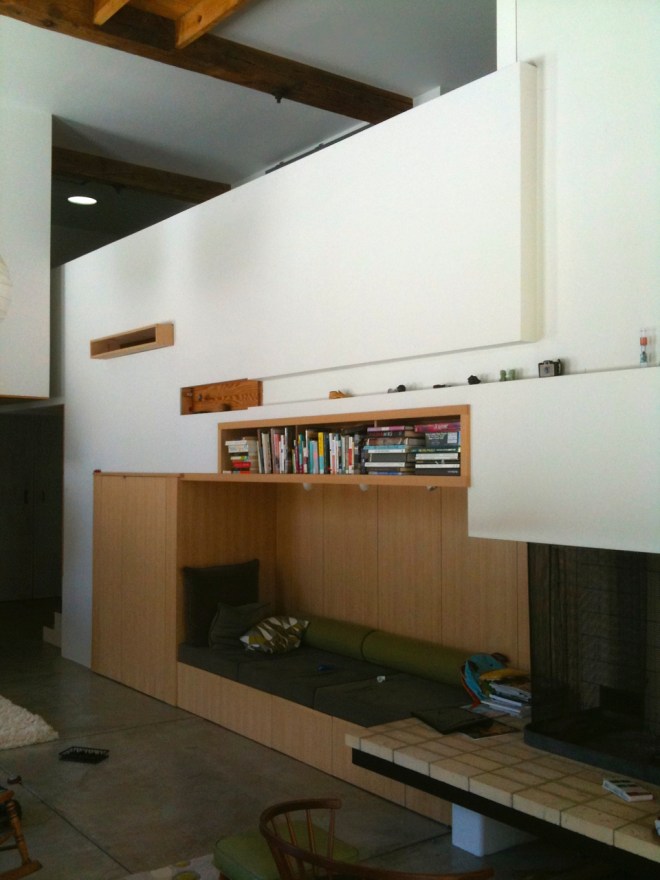
Inglenook: 2010; hickory veneer plywood with quarter-sawn white oak trim; water based polyurethane finish.

I designed and built this seating nook next to the fireplace my home in Shepherdstown, West Virginia, USA. Under the cushioned seating are four drawers. Where the recess ends but the hickory veneered plywood continues is an under-stair cabinet, the outfitting of which was completed at a later date by the Charles Snead Co. of Boyce, Virginia, USA. The inglenook includes adjustable recessed lighting above the seat. The inglenook gathers the warmth from the fireplace but is also one of the more pleasant places in the house during the summer months.

Inglenook