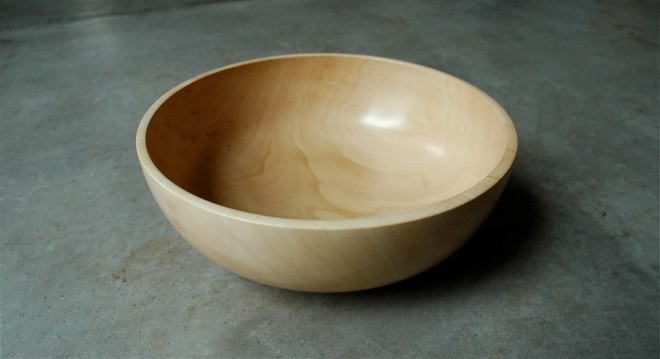
Pear wood bowl

Pear wood bowl
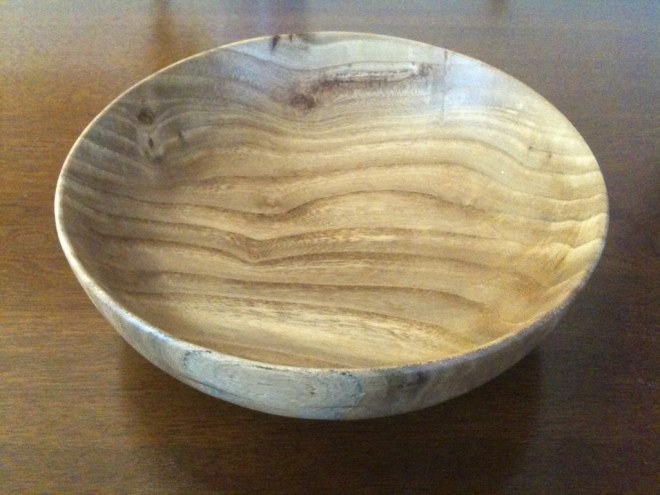
Bowl: 2009; Pyrus calleryana; apport. 9″ dia. by 3 1/2″ high.

8 15/16″ x 3 3/8″ from a log of about 12″ diameter. A blank, with a wall thickness just under an inch was turned in October. After monitoring the weight change in the blank (and knowing I wanted a bowl to bring to France), I chose to complete the turning. As it happens, the wood was still a little yet yielding a slightly distorted round as I completed the final turning. The pear wood log was from Paul Simmons of Valley Trees. Sanding was done up to 4000 grit. The finish is “salad bowl” finish with three coats of wax. Some lines are still present but are possibly within wax coat.

Update: This bowl was given to my friend and sometimes colleague Eric Duplan of TESIS. He lives with his family at an old farm in the Tourraine, providing space for his sizable metal and woodworking atelier and baking operations. This bowl receives heavy use and has survived a number of excursions in a microwave.
 

Pear wood bowl

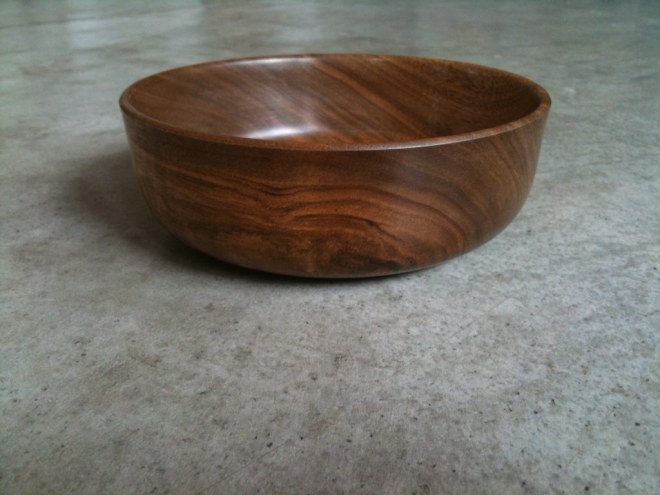
Walnut bowl

Walnut bowl 04
Bowl: 2009; Jugulars nigra; approx. 6″ dia. by 2″ high.

This bowl was turned from a blank that was part of grab bag of wood turning blanks. It has an oil and wax finish. Unfortunately, some minor scratches remain. While this bowl is one of my favorites, with its slight outward flare at the rim, I no longer use it for light snacks at home. Walnut wood is known to cause allergic reactions in many people. I have found that I am sensitive to the dust.

Walnut bowl

Kitchen bowl

IMG_0394
Bowl: 2009; Ulmus pumila; size unrecorded.

The grain is not very fine on this invasive species which grows quite rapidly in the eastern panhandle of West Virginia. The finish is just a quick coat of oil. This is a very casual bowl for the kitchen. It was turned from wet wood and is now an oval. The foot is a tenon but less apparent than my usual approach, being recessed into the bottom of the bowl.

Kitchen bowl

Osage orange bowl

3131060589_ab7b637447_o.jpg
Bowl: 2008; Macular pomifera; approx. 7 ½” dia. by 5 5/8″ high.

Bowl turned from osage orange logs harvested by an arborist, about 19 September 2008. After buying a new chain saw, I was finally able to start bucking the pile, much of which will find its way to the fireplace.

The wood was turned green, kept in a plastic bag as I struggled with its shape. Final dimensions are 7 9/16″ wide at the rim (7″ inside) by 5 5/8″ high (4″ deep inside). The foot rises 1/2″ high before breaking outward.

The sides and bottom, in particular, are thicker and heavier than I would like but I had a nice interior shape and was growing impatient with the time devoted to this bowl. Finish is salad bowl oil with three coats of wax.

Plans are to give this as a gift but I still need to tweak the finish. Some of the wax did not buff as nicely as it should due to vibration from the bowl (as it is no longer true-to-round at this stage).

Update: I gave this as a gift to my brother and it later developed a significant crack as it dried further. After some time, the shape came back into line and, to the best of my knowledge, the crack is no longer apparent.

Image

Stair

18480766588_4c0b66216b_k.jpg
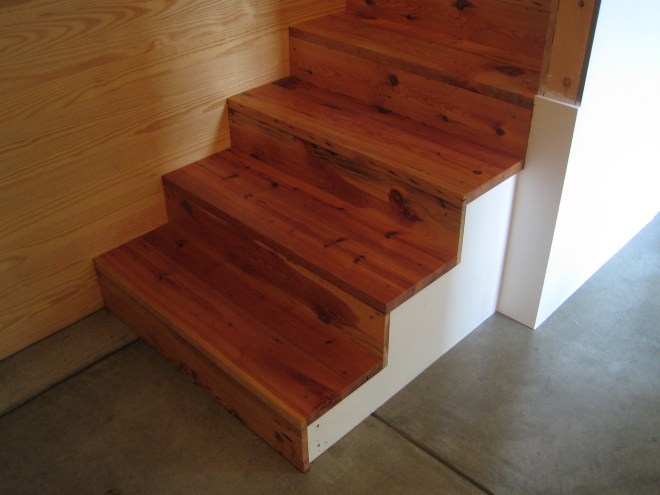
Stair treads and risers: 2005; reclaimed pine; oil and wax finish. Total rise of the staircase is 9′; total run is approximately 12′. 

Re-sawn and planed from reclaimed joists from a smaller industrial building on the same site, these treads and risers were each cut to fit into a stair case built by others. The fasteners are cut nails. The entire collection of treads and risers was laid out in the shop before installation, their positions being adjusted to present a pleasing range and transition of colors along the entire run.

Stair

Box with rocks

BoxWithRocks
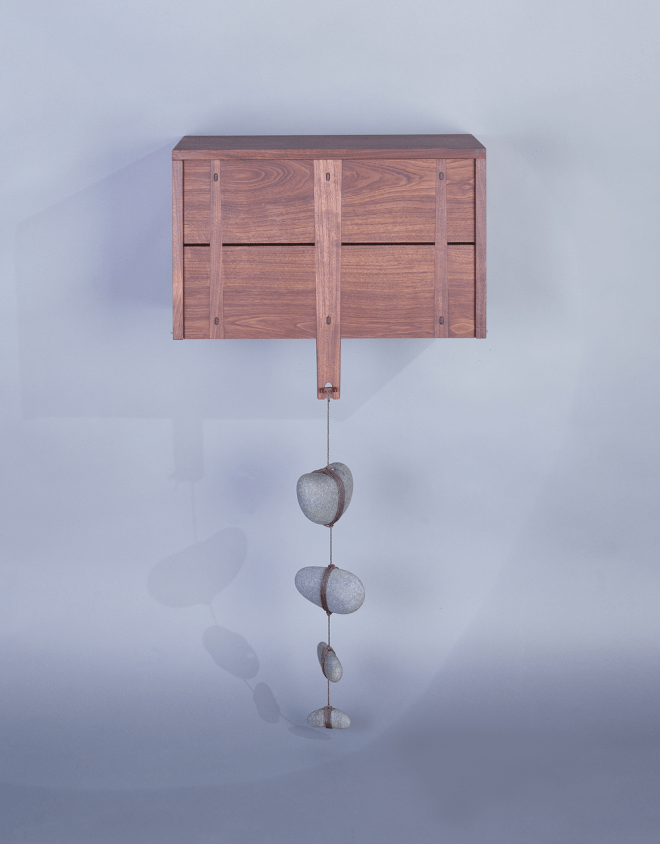
2002: case piece; walnut, wax twine, ash, granite beach stones; size unrecorded.

My second piece built during my time at the Center for Furniture Craftsmanship, the assignment being to make a case piece with at least one drawer and one door.

The door is counterbalanced with the rocks, such that only the lightest touch on the center spine, back to open and forward to close, results in the door moving on its horizontal pivot hinge as if engaged by a spring or pressurized cylinder.

The drawer on the piece is within the upper portion of the carcass, revealed only when the door is open. The splines are tapered, dovetailed, and pegged. No glue is used in the construction of the door. The carcass itself is constructed with dovetail joinery at the corners. The finish is tung oil.

Box with rocks